|
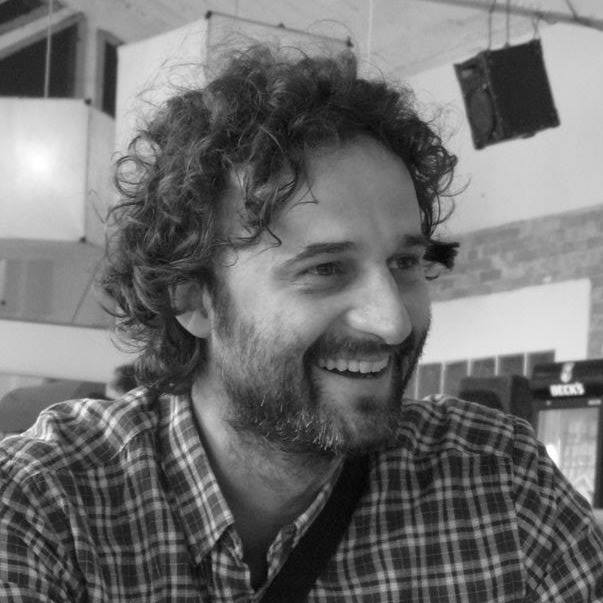
Michele DoroUniversitat Autonoma de Barcelona (UAB)Grup de Fisica de les Radiacions
Campus UAB - Edifici C-3, E-08193 Barcelona (Spain) Background Research Interests Publications and Seminars   The MultiCube Workshop |
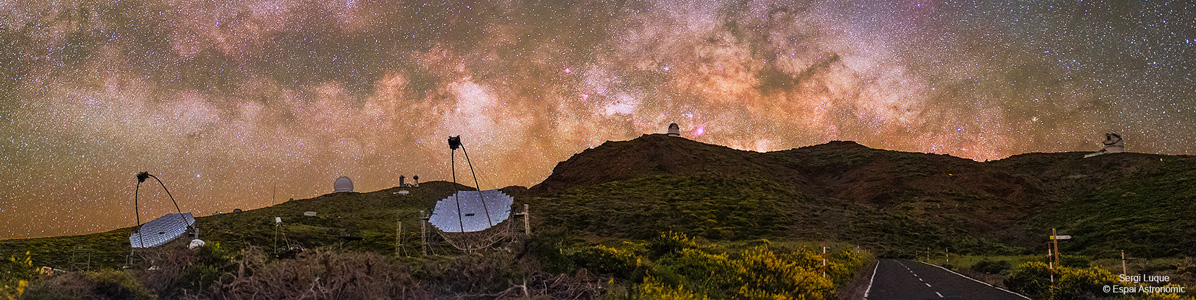
Since the Diploma Thesis I dealt with Astroparticle Physics, by joining the MAGIC collaboration (MAGIC stands for Major Atmospheric Gamma-ray Imaging telescope) with technological development and scientific tasks as main research occupation. MAGIC, operating since 2003 in the Canarian island La Palma, is currently the world largest Imaging Atmospheric Cherenkov Telescope (IACT). IACTs take advantage of the electromagnetic shower of particles initiated by very high energies cosmic gamma rays impinging onto the Earth atmosphere. The collection of Cherenkov photons produced by the electromagnetic shower permits the reconstruction of the primary gamma-ray energy and direction. Gamma-ray emission is related to non-thermal emission from galactic and extragalactic violent environments, such as pulsar wind nebulae, jets of particles from active galactic nuclei, the magnetosphere of pulsars and the gamma ray bursts, but many theories beyond the standard model of particles also predicts that dark matter can be seen in gamma-rays through its annihilation/decay products. MAGIC is constituted by two telescopes with parabolas of 17 m diameter that allow the attain of the lowest energy threshold of all IACTs, thus covering the open energy gap with gamma-ray satellite experiments. MAGIC is performing fundamental discoveries in astrophysics, like the discovery of gamma ray emission from a black hole at 5 billion light-years, revealing a more transparent universe than expected ("Very-High-Energy gamma rays from a Distant Quasar: How Transparent Is the Universe?", Science 320, 2008), and the pulsed emission of gamma-rays from the Crab pulsar ("Observation of Pulsed gamma-Rays Above 25 GeV from the Crab Pulsar with MAGIC", Science 322, 2008), or the first observation of very-high-energy gamma-ray emission from a microquasar ("Variable Very-High-Energy Gamma-Ray Emission from the Microquasar LS I +61 303", Science 312, 2006), unveiling important results on the acceleration of cosmic rays in this extreme objects.
Curriculum Vitae (English )
Diploma Thesis: Commissioning and Characterization of the Calibration
system of the MAGIC Telescope
(pdf)
PhD Thesis: Novel Reflective Elements and Indirect Dark Matter
Searches for MAGIC and future IACTs.
(pdf)
2004. Calibration System of the MAGIC I
telescope.
As a diploma student, I performed by thesis in Barcelona, Spain at the
Institut de Fisica d'Altes Energies (IFAE) institute. There
I followed the characterization of the calibration system of the MAGIC telescope in
its commissioning phase, flanked to M. Gaug (gaug@ifae.es). Ultra-fast avalanche
transistors are used to switch LEDs at different wavelengths to simulate the fast
(2 ns) pulses of Cherenkov light from atmospheric showers. The calibration system
is also composed by a PIN-diode measurement and a "blind"-PMT. The characterization
of the response of the calibration system and the analysis of the first
calibration runs were performed. The main results of the study were a) that the calibration system recently installed on the telescope was fully
operational and could be thereafter used, b) that the best calibration could be obtained
with a combination of LEDs that better resembles the spectrum of Cherenkov
light after atmospheric absorption. The diploma thesis was performed under the
supervision of Manel Martinez (martinez@ifae.es). Part of the work was done at the
MAGIC site. See my Diploma Thesis: "Commissioning and Characterization of the Calibration
system of the MAGIC Telescope"
2006-09 Responsible of the reflective surface
of the MAGIC II telescope.
IACTs demand robust mirrors. Their large reflectors are usually
tessellated with numerous mirror facets. As a PhD student, I was
appointed by the MAGIC Padova group for heading the design,
production, test-phase, optical characterization and installation of
mirrors on the second MAGIC telescope (MAGIC-II), currently on its
commissioning phase. MAGIC II mirrors are 1 sqm square-shaped,
all-aluminum sandwich. They are composed of two aluminium plates
interspaced by a honeycomb layer which provides rigidity, good heat
transmission and light-weight (see, e.g., M. Doro et al. "The reflective surface of
the MAGIC telescope", Nuclear Instruments and Methods in Physics
Research Section A, Volume 595, Issue 1, p. 200-203.; M. Doro, Phd Thesis, Padova, 2009.). The design
was optimized for larger surface and better insulation compared to
MAGIC I mirrors. A search on the market was performed for an
industrial partner for production and found in Vicenza, Italy
(Compositex Srl). The surface of the aluminum sandwich is
diamond-milled at the company LT-Ultra Precision, Germany. Then the
surface is quartz-coated at IFAM, Bremen, Germany. Tooling and moulds
were designed and produced. I followed also the optical qualification
of each mirror during and at the end of the production (measurement of
radius of curvature, spot-quality, reflectivity, insulation). The
optical quality of these facets is very high: mean reflectivity larger
than 85% in the Cherenkov wavelengths (mainly 300-600 nm), weight
reduced to 18 kg/m2, very reduced reflectivity loss (1%/year) and good
mechanical stability. I followed the optics qualification of the MAGIC
II reflector thorough ray-tracing simulations and headed the
installation of MAGIC II mirrors on the telescope in October 2007 and
completed in August 2008, coordinating the installation. Currently
I am studying the possibility of an absolute reflectivity measurement
of mirrors mounted on MAGIC II with the use of an SBIG camera mounted
at the center of the reflector and a reference star (following
R. Mirzoyan et al. "A method to measure the mirror reflectivity of a
prime focus telescope." Astropart.Phys.27:509-511,2007, e-Print:
astro-ph/0703174)
2006-08 Dark Matter searches with MAGIC.
I was the principal investigator for three campaigns of observation of
candidate sources of dark matter (DM) with the MAGIC telesope. The
principal investigator (PI) is responsible for defining the scientific
case, following observation and data analysis and curing the edition
and publication of the data. In 2006, I proposed the observation of
steady unidentified EGRET sources in the context of the intermediate
mass black hole (IMBHs) scenario proposed by Bertone et
al. (Phys.Rev.D72:103517,2005). IMBHs could be (they are not detected
yet) very spiky DM enhancements possibly localized in the Milky Way
halo. From numerical simulations, they show very high gamma-ray
fluxes. They could be already in the EGRET catalog, but
unidentified. A source was observed in 2006. Unfortunately, the
telescope was undergoing major technical problems that prevented us
from publication of these data. Only upper limits were derived. A
description of the analysis can be found in the Diploma Thesis of a
F. Zandanel which I followed as co-advisor: "Dark Matter Search with
the MAGIC Telescope: Analysis of the Unidentified EGRET Source 3EG
J1835+5918". In 2008 I was the PI of the observation of Willman 1 with
MAGIC. Willman 1 is one of the recently discovered ultra-faint
satellite galaxies with higher DM concentration (Strigari et
al. arXiv:0709.1510 [astro-ph]). It was observed in 2008 for 15 hours
with MAGIC. Upper limits were derived for few benchmarks neutralino
models showing that prospects of detection are positive only under the
assumption of relevant boosts in the models. The results were
published: "Upper Limits on the VHE
Gamma-Ray Emission from the Willman 1 Satellite Galaxy with the Magic
Telescope", The Astrophysical Journal, Volume 697, Issue 2,
pp. 1299-1304 (2009). I am also PI of a new target of observation,
which was observed in 2009 and is currently under analysis.
2008 Co-coordinator of CTA mirror working
group.
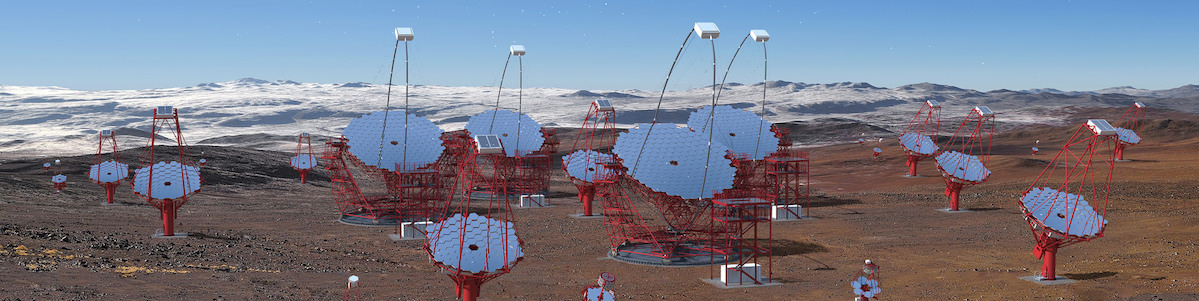
CTA (Cherenkov Telescope Array) is a developing project for a new
generation of Cherenkov telescopes, extending the capabilities of the
IACT technique as a result of the effort of the European or maybe
world-wide gamma-ray community (see M. Doro for the CTA consortium,
"CTA - A Project for a New Generation of Cherenkov Telescopes",
Submitted to NIMA. eprint arXiv:0908.1410, E. Lorenz, M.Doro "Building
Blocks for CTA: existing solutions and new designs. Mount and
Mirrors"; A. Foerster, M. Doro, "Technical Information
for the Development of Mirror Prototypes for the CTA Observatory", 2008). The CTA
mirror working group is responsible for a) definition of technologies for mirror facets,
b) definition of technology for mirror surface protection, c) creation of facilities for
mirror massive test and performance characterization. I am personally developing
aluminum mirrors for CTA, with improved design and performance. In addition, I follow
the realization of a complete facility at National Laboratories in
Legnaro (Padova, http://lnl.pd.infn.it) where the mirror prototypes should be fully tested. For exaple, we
want to test focal length dependence with temperature, absolute reflectivity, exposure
to salt-acid fog and intense UV illumination. We are therefore currently building a selfmade
container where to install the mirror. We have contact with industrial partners
and company for the realization of this project. The Padova group is the coordinator
of this working package and I am coordinating of the activities within this
group.
2008-09 Prospects of dark matter searches with
MAGIC II and CTA.
Besides current
experiments, it is quite important in our field to study the prospect of observation of
DM sources with future experiments, also due to the rapidly changing field of DM.
The prospects of observation of two representative satellites were studied in the context
of MAGIC II and CTA. The following aspects were clarified: a) which technical
telescope aspects may influence the detection of DM, b) how much the increase in
sensitivity and decrease of energy threshold affects the prospects of detection, c) that
the recently-discovered internal bremmstrahlung mechanism (Bringmann et al, JHEP
0801:049,2008) introduces features in the gamma??ray spectrum that affect the detection
probabilities for different models of neutralino; d) which are most probable regions
of the parameter space of the neutralino for observation or constraints. The study can
be found in T.Bringmann, M.Doro, M.Fornasa Dark matter signals from Draco and
Willman 1: prospects for MAGIC II and CTA, JCAP 2009:01 (016). Currently I am
working on a different topics with M. Fornasa (INFN-Padova) about how to deal with
spectra features in the gamma-ray spectrum of annihilation of DM with
IACTs.
Publications on refereed journals
Publications with the MAGIC collaboration (53,
up to 2009, Nov 1st)
For a full list of publications with the MAGIC collaboration, please
refer to the Curriculum Vitae (English )
Talks at conferences
Partecipation in Books
Author: Michele Doro, (michele.doro@pd.infn.it). Last modified: 2009, Nov. 1st